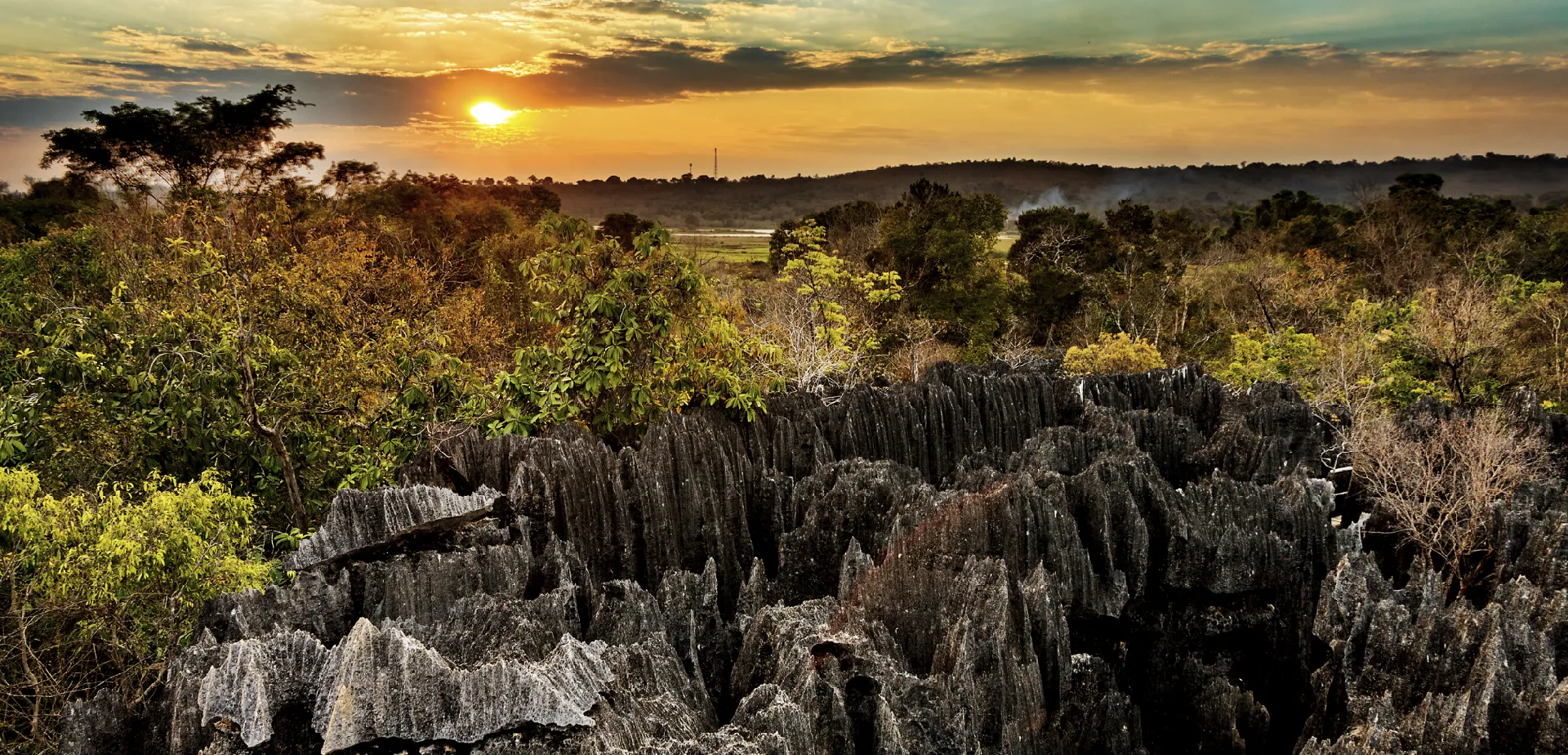
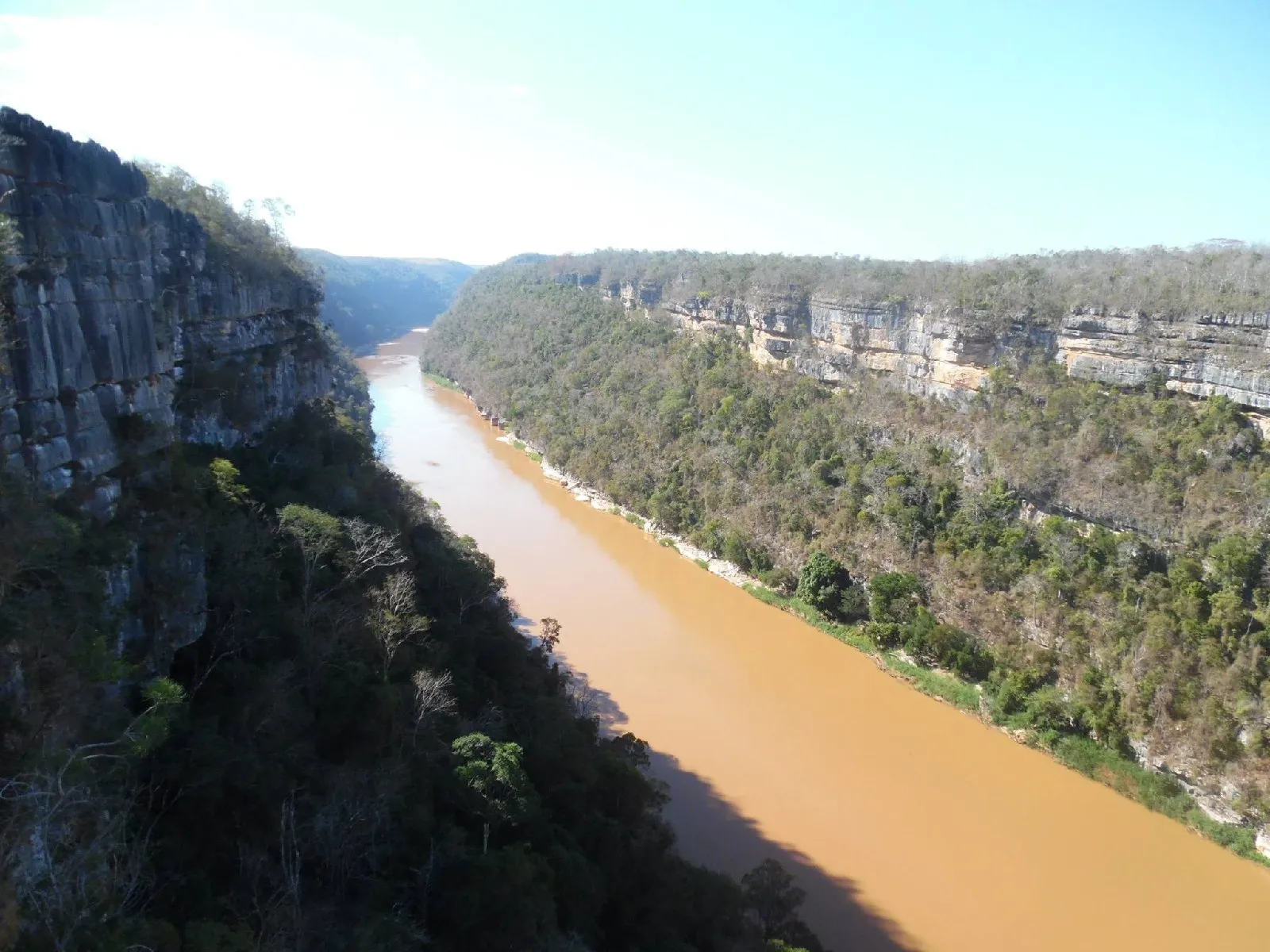
At Tsingy de Bemaraha in western Madagascar, sharp limestone pinnacles rise above pockets of forest. Near Bekopaka, the landscape draws your attention both upwards to the rock towers and down into the shaded passages between them. The Manambolo Gorge adds another perspective on this limestone country, where cliffs and water meet.
The rock began as sediments beneath an ancient sea. After the limestone was exposed, rain and groundwater gradually carved it into caves, channels and pointed formations. Today, Bemaraha forms part of the Andrefana Dry Forests World Heritage property, recognised for its landscapes and biodiversity.
Life between the limestone
The stone forest is also a living forest. Dry deciduous woodland grows on the plateau, while sheltered hollows and caves support different vegetation. These changes in shade and moisture help explain why plants can thrive in a landscape that first appears so bare.
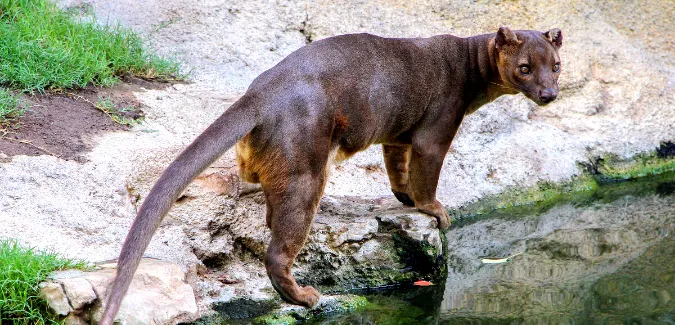
Decken’s sifaka is among the lemurs found here, alongside birds and reptiles. A local guide can help you notice the life around the rocks as well as the formations themselves. Wildlife sightings are never guaranteed, so make room for the smaller details rather than arriving with a checklist.
Choosing between Small and Big Tsingy
Small Tsingy, also known as Petit Tsingy, introduces the limestone passages and viewpoints on a smaller scale. It can help you understand how comfortable you feel moving through this terrain before considering more demanding circuits. Smaller formations do not automatically mean an easy walk: footing, narrow spaces and exposure still matter.
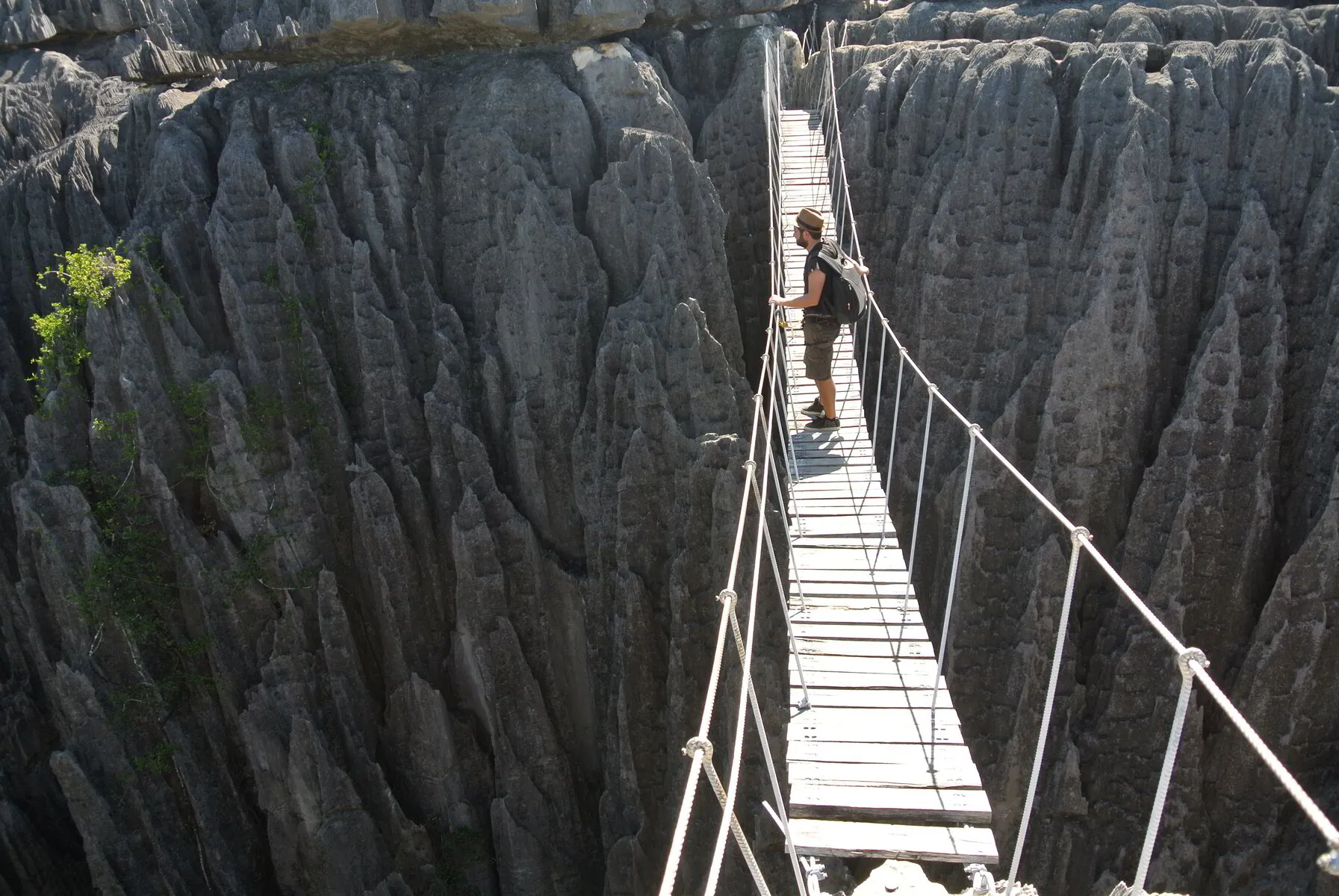
Big Tsingy, or Grand Tsingy, brings taller formations and more demanding route options. Some circuits include suspension bridges, deep crevasses and passages through canyons. This is not simply a viewpoint reached by a casual stroll. Tell us about your walking experience, mobility and comfort with heights so we can discuss the proposed circuit before you choose your journey.
Include Bemaraha in your route
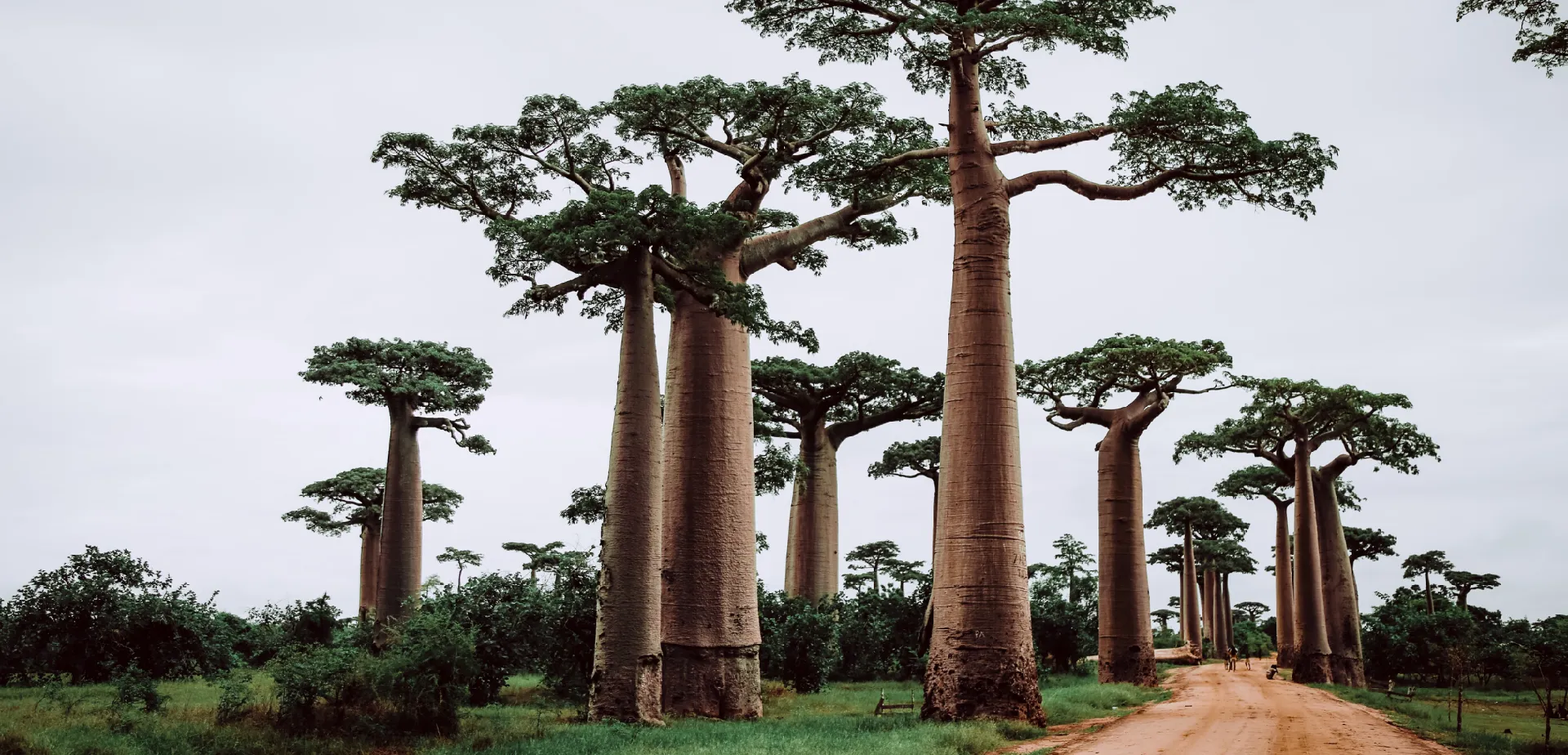
Our Madagascar Highlights journey includes Small and Big Tsingy between the Tsiribihina River section and Kirindy Forest. It starts in Antananarivo and finishes in Morondava, with the Avenue of the Baobabs towards the end of the route.
For a journey that continues along the coast, Tsingy, Baobabs and Beaches starts in Morondava and finishes in Ifaty. Read the complete itinerary before arranging arrival and onward travel. Different tours have different endpoints, so there is no single airport plan that suits every journey.
Questions about visiting Bemaraha
Is Big Tsingy suitable if I dislike heights?
Some circuits involve exposed heights and suspension bridges. Tell us before booking so we can discuss the proposed route and its demands. Do not assume a tour’s overall activity label describes every park walk.
When can I visit Tsingy de Bemaraha?
Check access and circuit opening for your intended travel dates with us before making plans. Conditions and operating arrangements can change; this article does not promise that a particular route is always available.
Will I see lemurs in the park?
Lemurs live in Bemaraha, including Decken’s sifaka, but sightings cannot be promised. Allow time to observe the forest and follow your guide’s instructions during the visit.
Explore further
Kirindy Reserve offers another look at western Madagascar’s forest wildlife. Read about the Avenue of the Baobabs for the landscape that completes many journeys through this region.