Kirindy’s appeal is in the forest itself: lemurs moving through branches, baobabs rising above the trees and wildlife that becomes active after dark. North of Morondava in western Madagascar, this dry deciduous forest offers a different setting from the island’s eastern rainforests.
A visit is best approached with time to look and listen, rather than a list of animals to tick off. Guided walks help you understand what you are seeing, but Kirindy’s wildlife remains wild. No particular sighting can be promised.
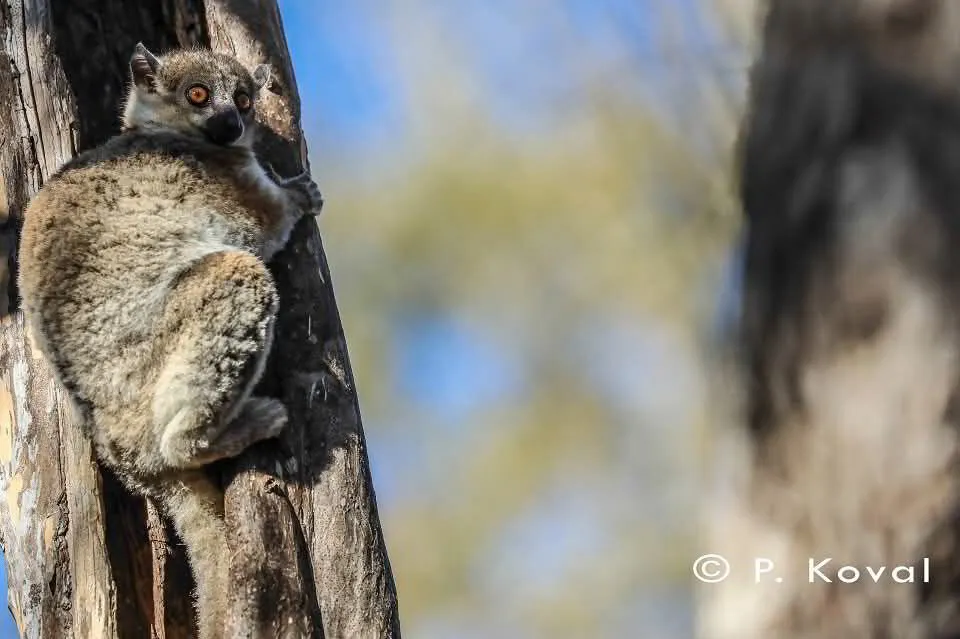
Flora and fauna of the dry forest
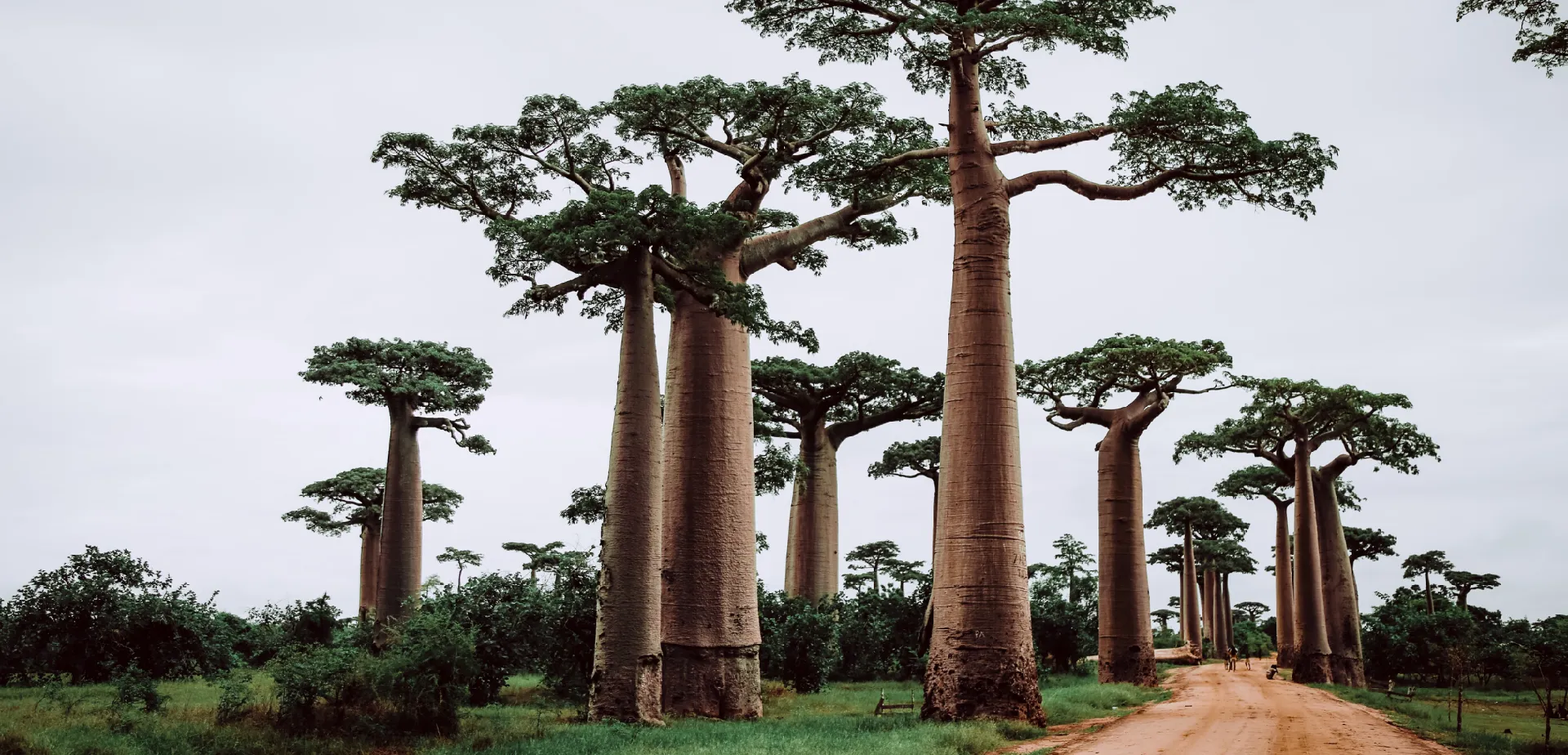
Baobabs are part of Kirindy’s landscape, but there is much more to notice beneath them. Birds, reptiles and lemurs share the forest, and a guide can help draw your attention to details you might otherwise pass by.
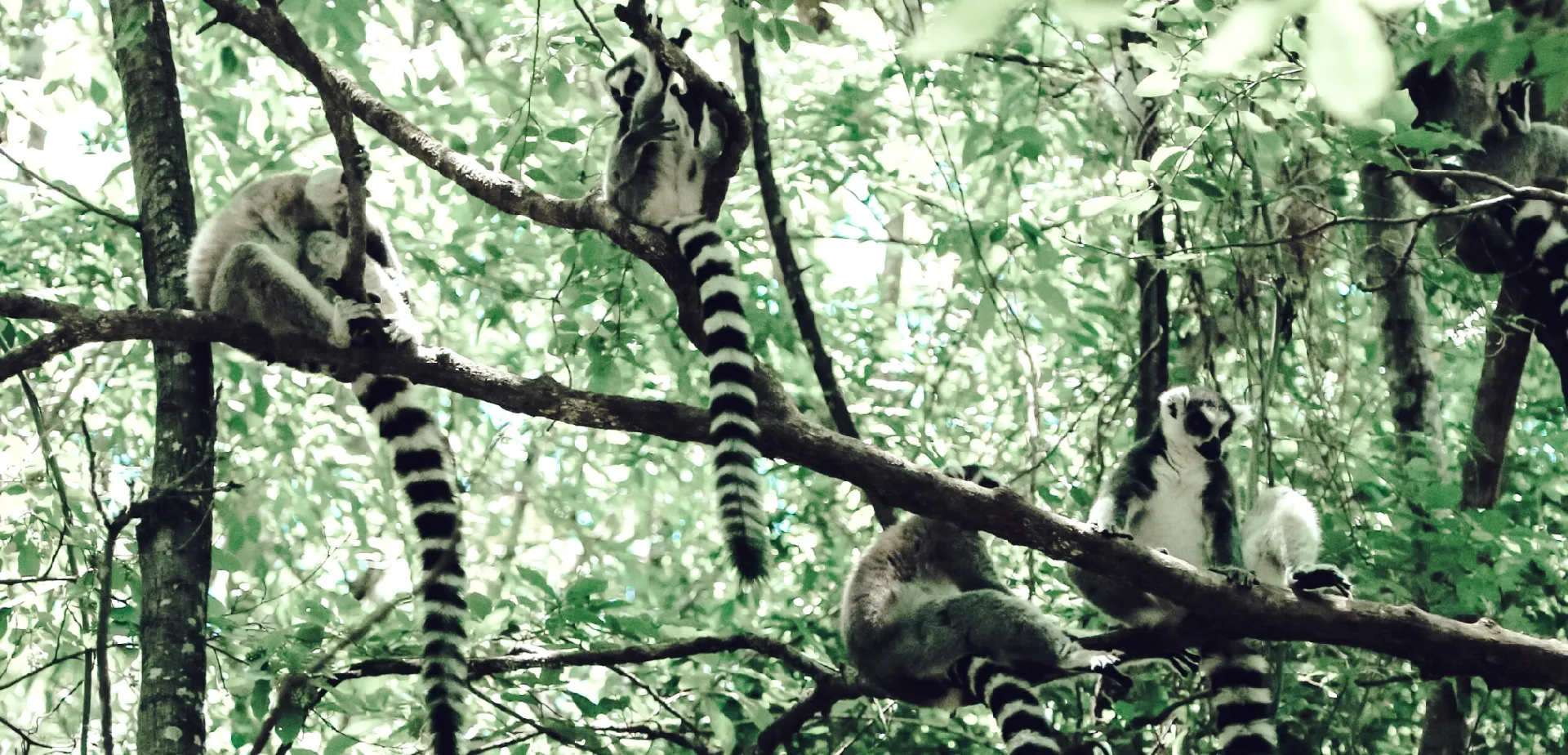
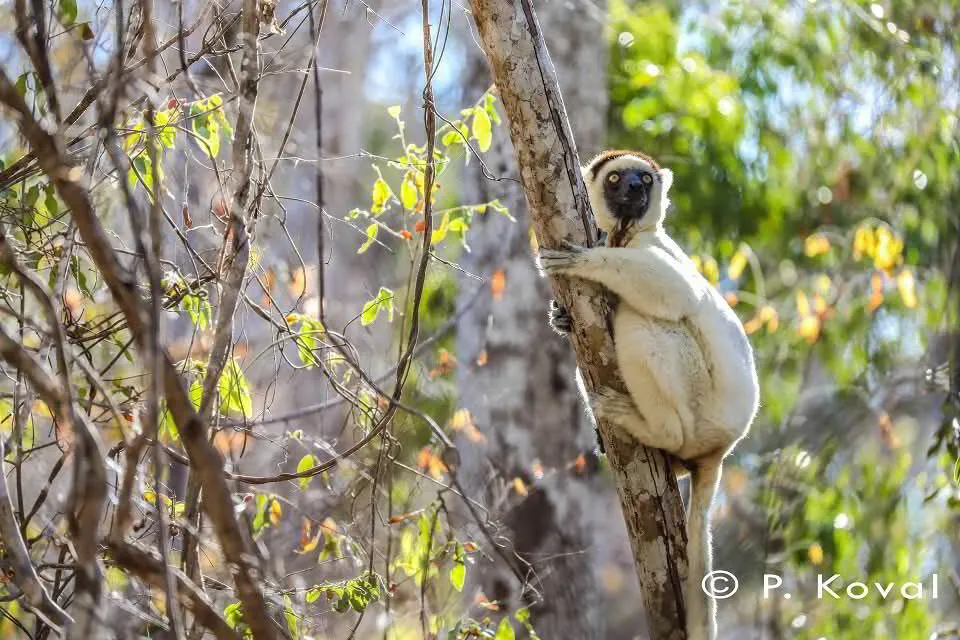
Verreaux’s sifaka is among the resident lemurs. Look for movement in the branches rather than expecting the familiar images of sifakas crossing open ground. After dark, nocturnal lemurs bring another side of the forest into view. The Malagasy giant jumping rat is also a nocturnal resident, with a range restricted to the remaining dry forests of the Menabe region.
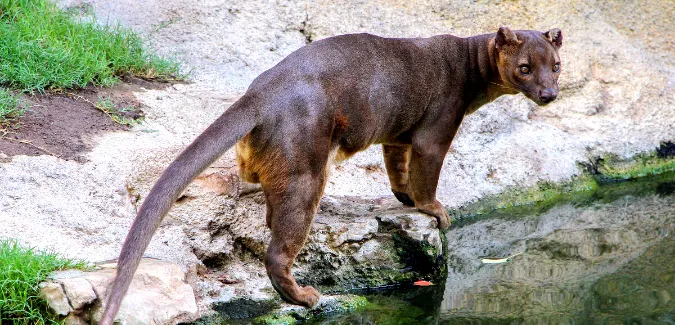
Kirindy is known for the fossa, a carnivorous mammal native to Madagascar. An encounter can be memorable, but it is a possibility rather than a scheduled part of a walk. Give any animal space and follow your guide’s instructions.
Visiting by day and after dark
Daytime and night walks offer different perspectives on the same habitat. In daylight, you can take in the forest’s structure and watch for active lemurs and birds. At night, attention shifts to the smaller movements and sounds of nocturnal wildlife.
Local knowledge makes a difference. We work with local guides in the places we visit, helping you connect an animal or plant with its place in the forest. Ask us which walks fit your chosen itinerary and what access arrangements apply to your visit.
Conservation and planning your visit
Kirindy Forest lies within the Menabe Antimena Protected Area. Habitat loss and fires threaten the region’s dry forests, making conservation work important beyond the paths visitors see. Researchers, local communities and conservation teams are involved in protecting this habitat and understanding its wildlife.
Keep your visit considerate: follow the guide, leave plants and animals undisturbed and take your rubbish away. Seeing fewer animals than expected does not make a walk unsuccessful. Understanding the forest is part of the experience too.
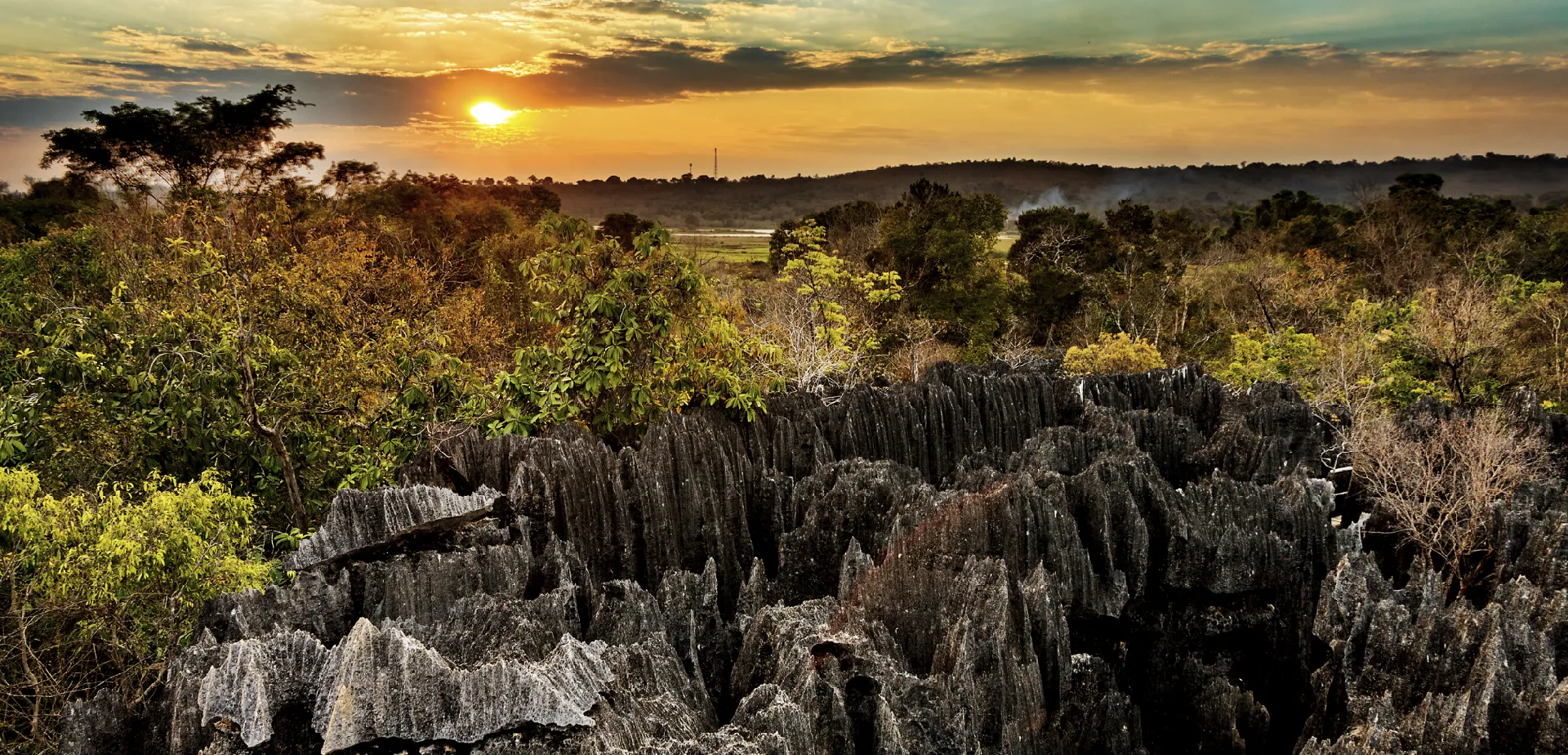
Kirindy can form part of a journey through western Madagascar, alongside places such as the Avenue of the Baobabs and Tsingy de Bemaraha. Check the actual route before making travel arrangements. Our tours have different starting and finishing locations, so arrival planning should follow your chosen itinerary rather than a general airport recommendation.
Questions about Kirindy
Where is Kirindy Reserve?
Kirindy Forest is north of Morondava in western Madagascar, within the Menabe Antimena Protected Area.
Will I see a fossa?
Possibly, but no sighting can be promised. Ask your guide about wildlife activity and enjoy the other animals and plants along the way.
Can I visit at night?
Guided night walks are part of the visitor experience at Kirindy. Ask us to confirm current arrangements for your itinerary before planning around one.