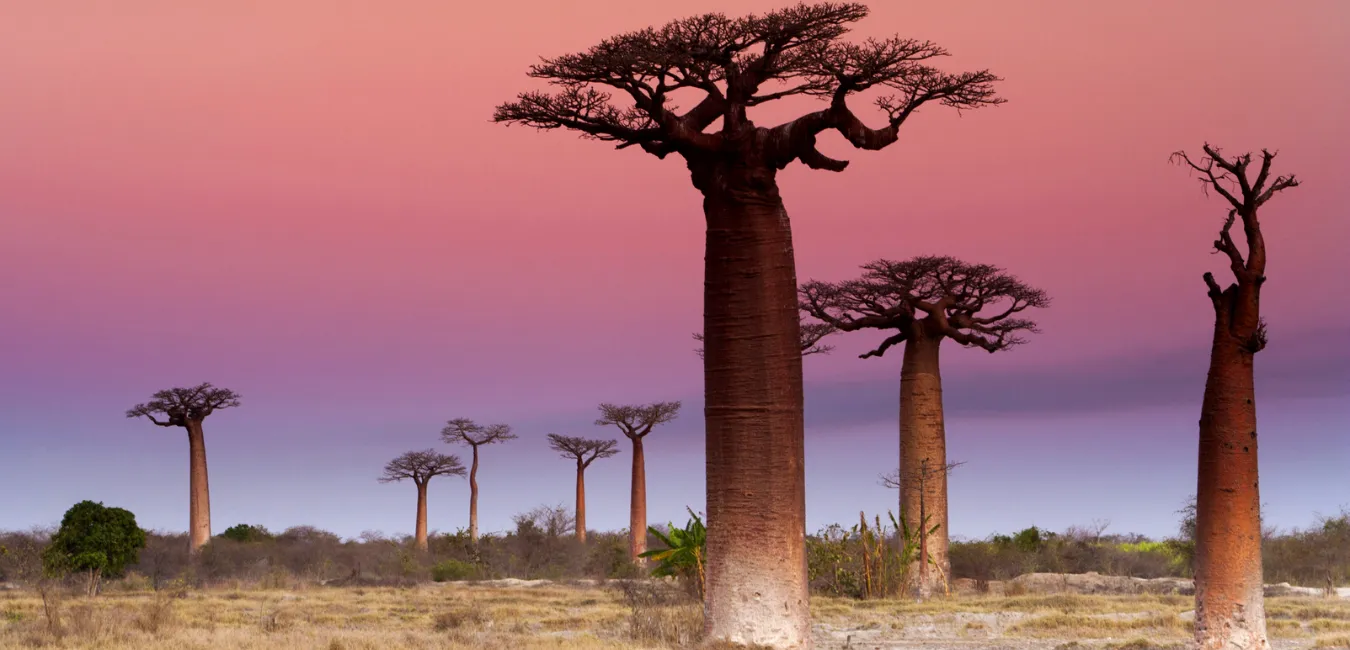
Madagascar's baobabs are easy to recognise: broad trunks, branches gathered high above the ground and a shape quite unlike the trees around them. The Avenue of the Baobabs is the best known setting, but it is only part of the story. Across the west and southwest, these trees belong to a wider landscape of dry forest, villages and coast. Seeing them in different settings gives you more than a photograph of the famous avenue.
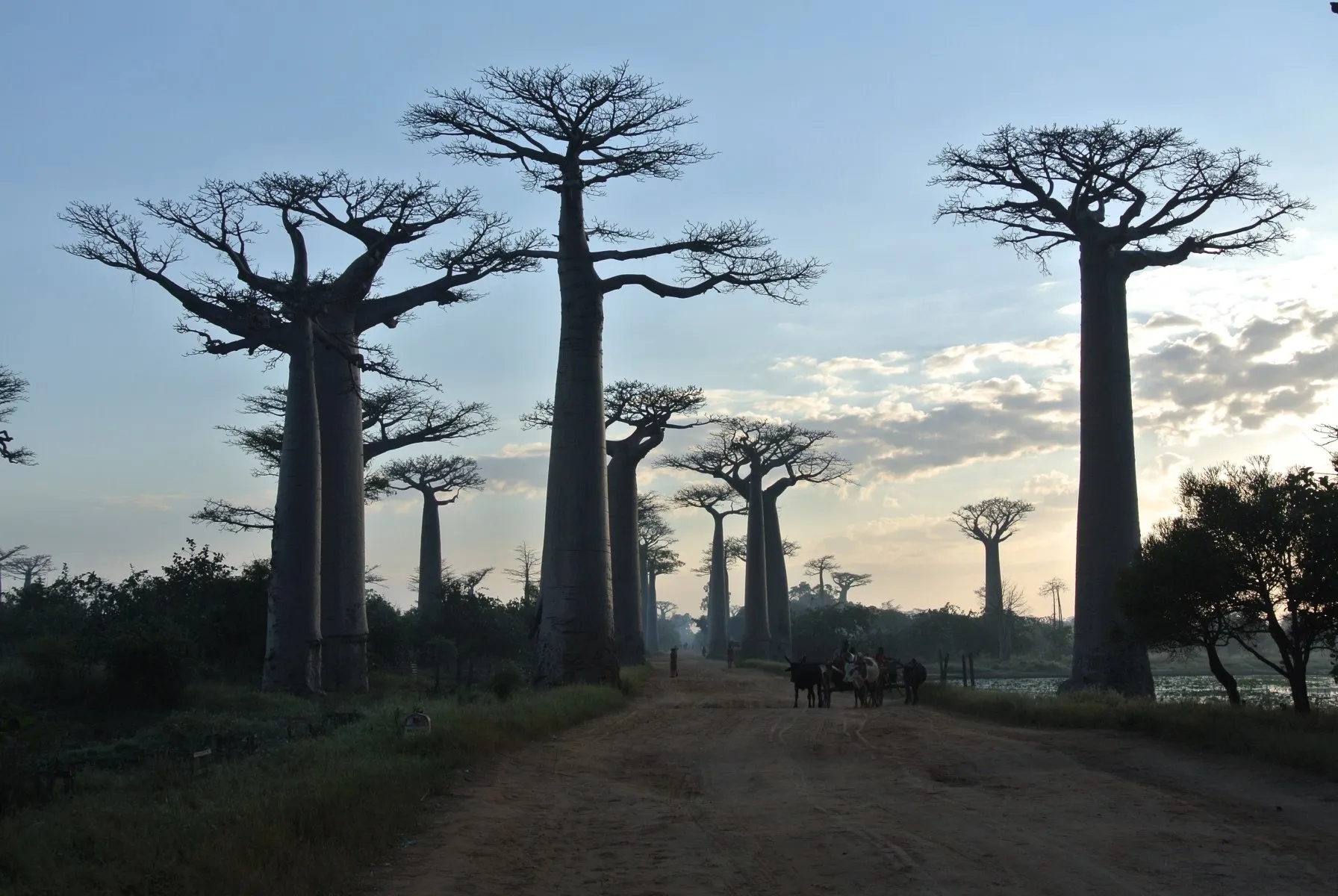
What makes a baobab different?
Baobabs store water in their trunks, helping them cope with dry conditions. Madagascar is home to species found nowhere else, including the giant baobab, Adansonia grandidieri.
These trees also have practical value. The giant baobab's fruit is eaten, its seeds provide cooking oil and fibres from its bark and wood are used for crafting and thatching. That relationship with daily life is worth understanding alongside the tree's striking appearance.
Where to see baobabs in Madagascar
Choose a region that fits your journey rather than trying to connect every place on this list. Western and southwestern stops offer different ways to see baobabs.
Avenue of the Baobabs
Near Morondava in the Menabe region, the avenue brings tall baobabs together along a road. Sunrise and sunset draw out the shapes of the trunks and branches. Our Avenue of the Baobabs article looks more closely at this setting.
Morombe and its surroundings
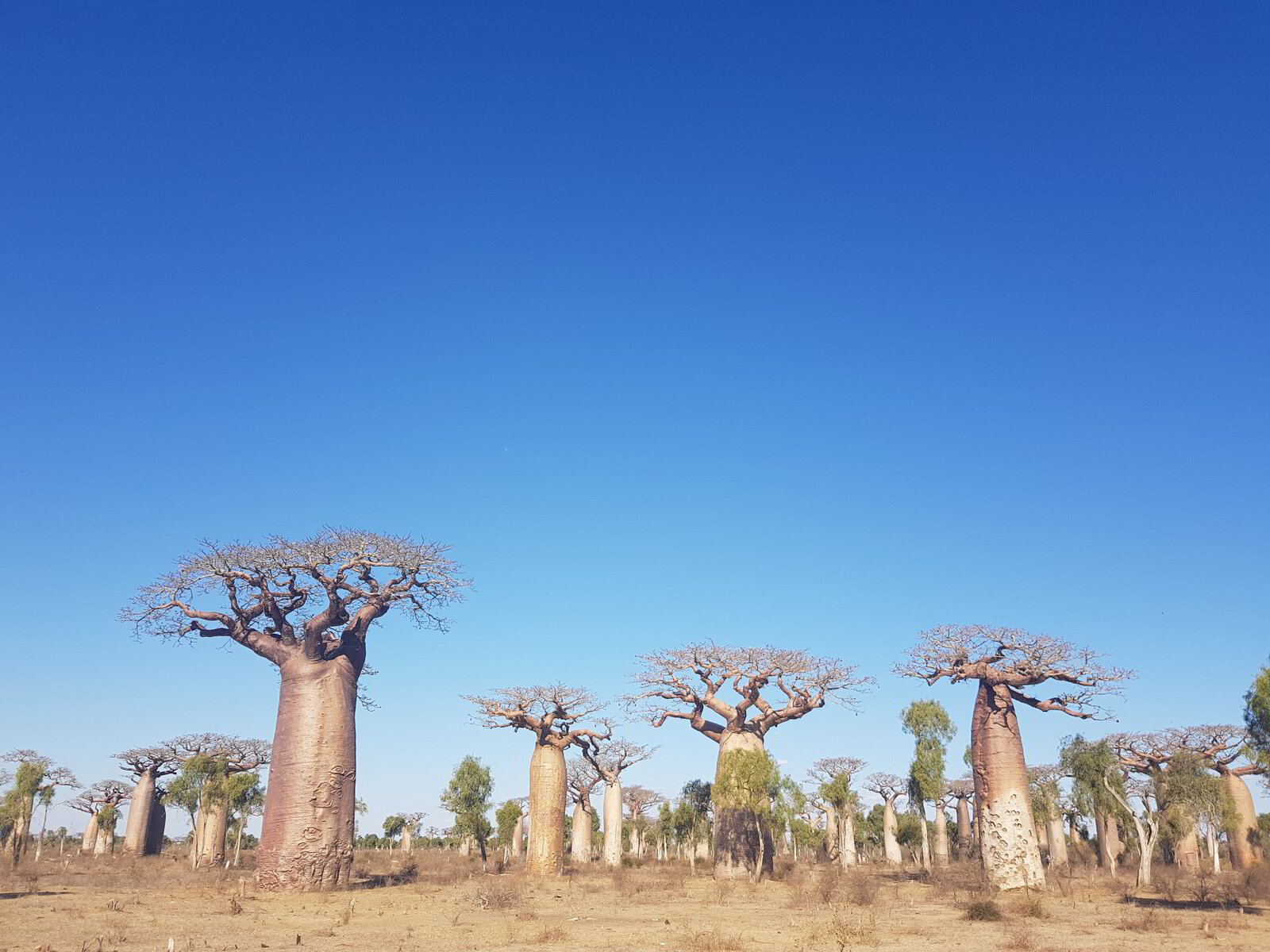
Around Morombe, baobabs form part of the broader southwest landscape. This is a region to consider when you want your journey to include coastal places as well as time among the trees, rather than a separate visit to the avenue.
Ambatomilo
Ambatomilo lies north of Toliara, along the southwest coast. Here, baobab landscapes can sit alongside a coastal stay. Ask us how the area might fit your route instead of assuming it is a quick addition to a western itinerary.
Toliara and Ifaty
The spiny forest around Ifaty offers another setting for baobabs near Toliara, also known as Tuléar. Reniala Reserve is one of the places to discuss when planning a visit to the southwest. A local guide can help you notice more than the largest trunks.
The Baobab in Love
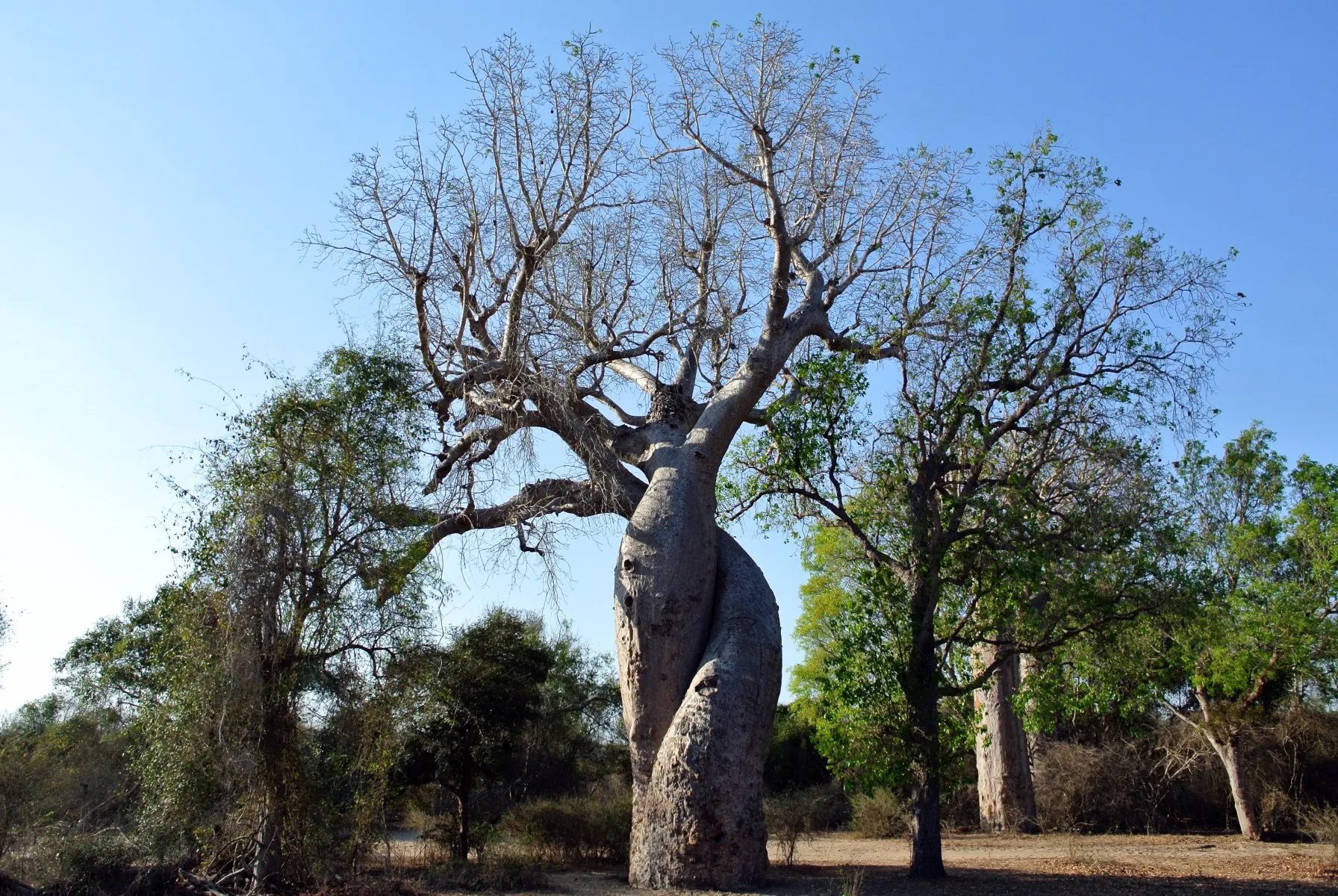
Near the avenue, an intertwined pair is known as the Baobab in Love. The interest here is in the way the trunks have grown together. Give the trees space and follow your guide's advice about approaching them.
Kirindy Reserve
Kirindy provides a different context for a baobab visit in western Madagascar. Rather than seeking a single named giant, ask about the trees as part of the surrounding forest. Read our Kirindy Reserve article when considering this area.
The road to Bekopaka
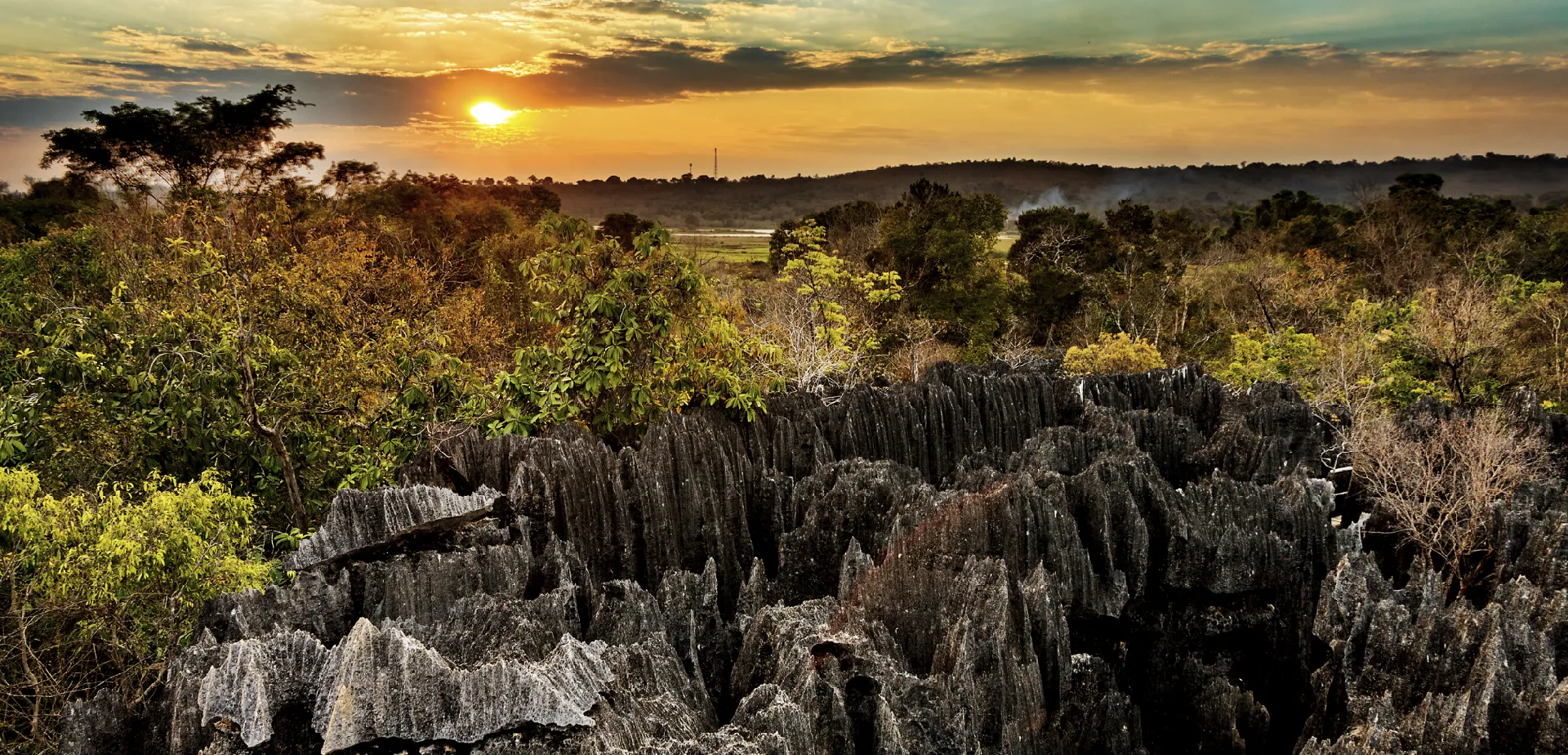
Baobabs also appear along the journey towards Bekopaka and Tsingy de Bemaraha. They are part of the route's changing scenery, not a reason to rush the journey. Discuss suitable stops when planning your western itinerary.
Belo sur Mer
Around Belo sur Mer, baobabs belong to a landscape that connects dry forest with the western coast. Consider this area on its own terms rather than treating it as another version of the avenue or confusing it with Ifaty.
Planning a visit with WAU Madagascar
We are a local tour operator in Madagascar, working with local guides in the places we visit. Our all inclusive small group tours offer a way to explore these landscapes together. Browse our tours, then ask us which route suits your interests.
Before arranging flights, check the start and finish locations of your chosen tour. Our routes do not all begin or end in the same place. Confirm the actual baobab stops and any private extension separately from the group programme.
Questions about Madagascar's baobabs
Are baobabs found only in Madagascar?
No. Baobabs also grow in continental Africa and Australia. What makes Madagascar distinctive is that it has species found nowhere else.
Can I see baobabs without visiting the avenue?
Yes. The spiny forest near Ifaty and other western and southwestern landscapes offer alternatives. The right choice depends on the route you are taking, not simply which site is most photographed.